
Calhoun County Criminal Court Cases
Calhoun County belongs to Georgia's South Georgia Judicial Circuit. Superior Court has exclusive felony trial jurisdiction, and its clerk maintains felony case numbers, indictments or accusations, docket entries, orders, pleas, judgments, and dispositions. The Calhoun Superior Court Clerk is at 31 Court Street in Morgan and can be reached at (229) 849-2715.
Magistrate Court handles warrants, first appearances, and preliminary matters but does not conduct felony jury trials. Probate Court may hear qualifying traffic and misdemeanor matters. An active municipal court may retain ordinance and traffic dockets for Arlington, Edison, or Leary. These files do not automatically merge into Superior Court merely because each involves alleged criminal or traffic conduct.
Superior, Magistrate, or Probate?
Choose the clerk by the procedural question. Call Superior Court for a filed felony, indictment, accusation, trial docket, or final felony disposition. Call Magistrate Court at (229) 849-2115 for a warrant, first appearance, bond-stage record, or preliminary matter. Probate Court, also reached through (229) 849-2115 at 31 Court Street, Suite C, is the route to verify qualifying traffic or misdemeanor jurisdiction.
For a city citation, contact the relevant city hall and confirm whether a municipal court is active and where its docket is kept. No official municipal search portal was located. Court routing matters because “no case” from one clerk means only that the supplied record was not found in that clerk's system.
Searching Calhoun County Case Records
Georgia has no complete free statewide trial-court search, and the research found no public Calhoun portal with documented fields or electronic coverage dates. The dependable channel is the appropriate clerk. A prepared call can distinguish a remote name search from a file that requires courthouse, paper, or archive retrieval.
- Classify the matter as felony, warrant or preliminary, traffic or misdemeanor, or municipal.
- Call the matching clerk and provide the full name, spelling variants, and case number when known.
- Narrow the inquiry with approximate arrest or filing date, case type, and date of birth if the clerk permits its use.
- Ask for the docket sheet and final disposition before choosing individual documents.
- Confirm plain or certified copy cost, delivery method, prepayment, archive retrieval, and expected timing.
| Field Label | Type | Required | Notes |
|---|---|---|---|
| Last name | Verbal/text | Yes for name search | Give exact spelling and known variants. |
| First name | Verbal/text | Yes for name search | Add middle name or initial to separate matches. |
| Case number | Identifier | No, but preferred | Do not substitute a booking or warrant number without labeling it. |
| Date of birth | Date | Ask clerk | Use only if the clerk permits it for identity matching. |
| Case type or year | Description/date | No | Approximate filing or arrest year narrows paper and electronic indexes. |
No Online Result Is Inconclusive
A missing web result does not establish that Calhoun County has no case. The county materials do not expose a complete portal, its search fields, scanned-document inventory, or index dates. An older file may be paper or archived; a name may differ; a matter may remain with Magistrate, Probate, or a city; charges may not yet be filed; or access may be restricted.
Ask the clerk what years are indexed electronically, whether staff can search remotely, whether a docket sheet can be emailed, and how archived retrieval works. If the supplied identifier is a booking number or warrant number rather than a court case number, say so. That distinction often explains an unsuccessful first search.
Inside a Calhoun County Case File
A public criminal file commonly begins with its case number, filing date, court, assigned judge, parties, case type, and status. Charging documents identify counts and statutes; the docket places hearings, motions, pleas, orders, and outcomes in sequence. Ask for the docket and disposition first because they reveal which additional documents answer the question.
| Case Number & Court | Unique court identifier, filing date, division, judge, case type, and status. |
|---|---|
| Charging Document | Accusation or indictment listing counts, statutes, classification, and amendments. |
| Docket Entries | Chronology of filings, motions, orders, pleas, trial events, and later proceedings. |
| Hearing Dates | Arraignment and other scheduled or completed court events where public. |
| Disposition & Judgment | Dismissal, nolle prosequi, plea, verdict, acquittal, conviction, or other outcome. |
| Sentence & Conditions | Custody, probation, fines, costs, restitution, and conditions as ordered. |
Booking Charges Versus Filed Charges
The jail records charges presented at intake. Prosecutors later decide what to file, and a grand jury may return an indictment or no bill. Counts can be amended, dismissed, or resolved differently from the booking allegation. Therefore an arrest lookup and a criminal case search answer different questions.
An accusation is a prosecutor-filed charging document available for eligible offenses; an indictment is returned by a grand jury. Nolle prosequi records a prosecutor's decision not to continue a charge at that time. Dead docket status suspends active prosecution without being identical to an acquittal. Read the judgment and disposition for each count rather than summarizing the case from its first label.
How a Criminal Case Moves
A warrant or arrest may precede jail booking and first appearance, but those events do not guarantee a Superior Court filing. Prosecutor or grand-jury action establishes filed charges; arraignment presents them and takes a plea. Motions and hearings follow, then a plea or trial produces a disposition. Sentencing is a separate event after a qualifying judgment. No reliable Calhoun stage-by-stage timetable was published, so ask the clerk about the particular docket.
Case flow: Charges Filed › Arraignment › Pretrial › Plea or Trial › Disposition › Sentencing
Certified Dispositions and GCIC
A certified disposition is often the most useful document when reviewing an incomplete Georgia history. It identifies the official outcome and carries the clerk's certification. Ask the Superior Court clerk whether the disposition can be located and certified, its cost, accepted payment, and delivery method; no Calhoun fee schedule was found.
If a GCIC history omits or misstates the ending, obtain the certified outcome and ask the court or originating agency about transmitting the correction. Correct the record before considering Georgia record restriction. Restriction under O.C.G.A. §35-3-37 limits eligible GCIC information but is not destruction, and a separately public court file may require its own sealing process.
Court Files and State Records
The clerk's docket and a GCIC history are separate products. The GBI's authoritative GCIC FAQ explains criminal-history contents, access, correction, fingerprints, and restriction.
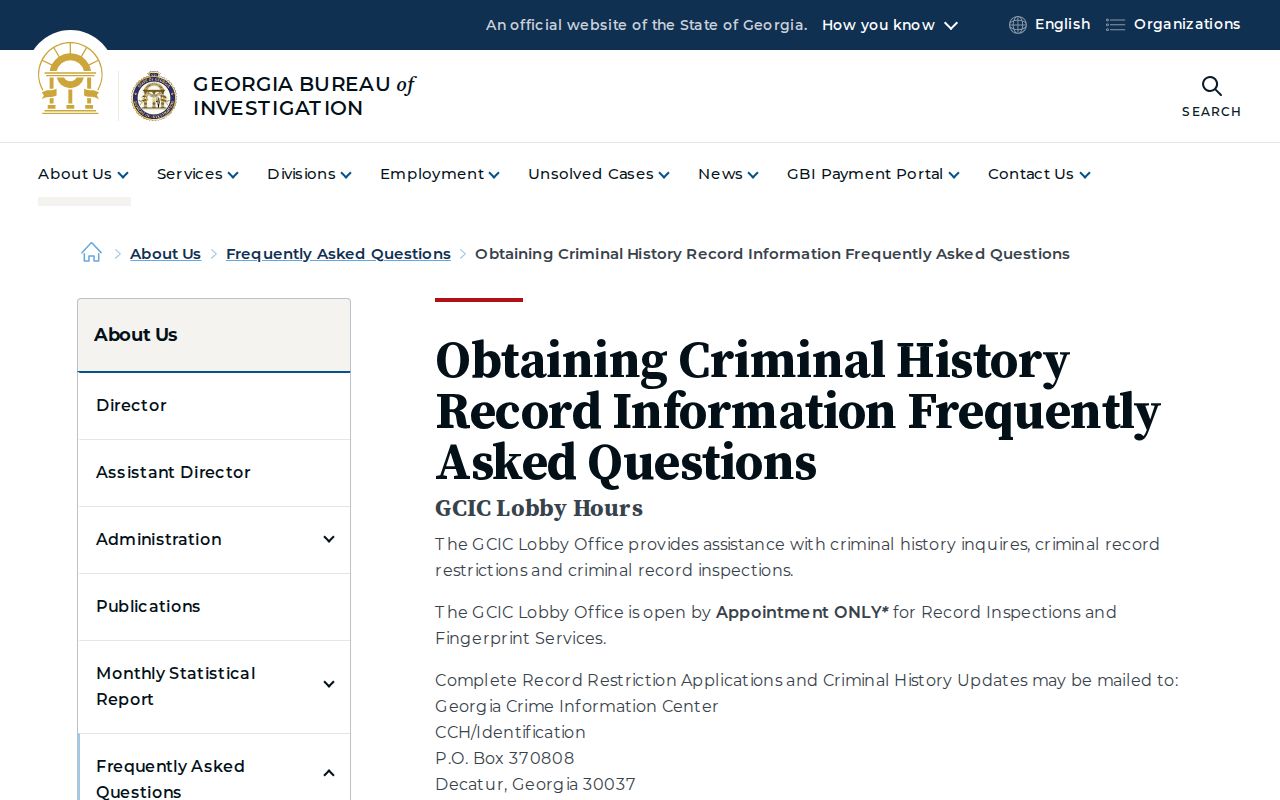
GCIC organizes reported arrest cycles and dispositions, while the Calhoun clerk preserves the underlying filed charges, docket, judgment, and certified disposition. A mismatch should be resolved with the originating record rather than by choosing whichever summary appears first.
For authorized fingerprint processing or a qualifying personal-request route, the official Georgia Applicant Processing Service registration and appointment portal is operated through IdentoGO.
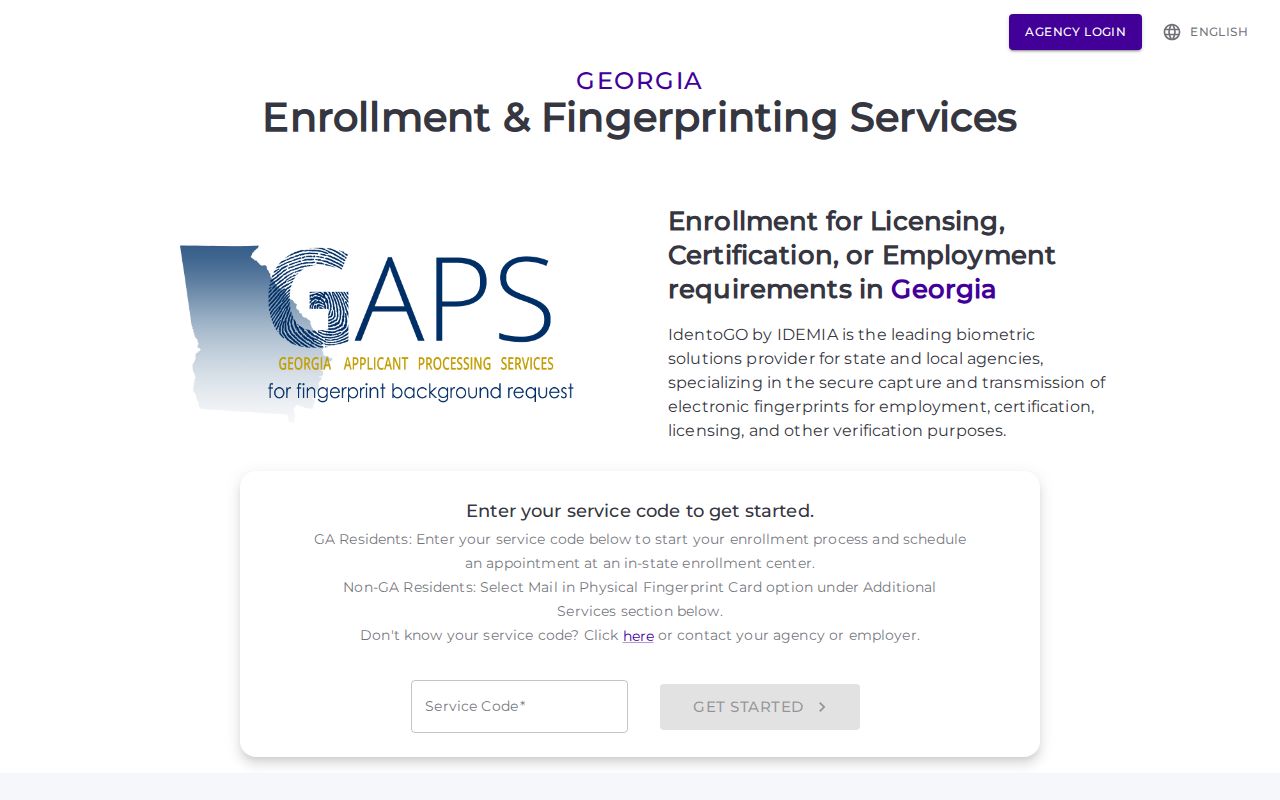
GAPS is not a Calhoun court-case search. A fingerprint result may help identify a reported state history, but the Superior Court clerk remains the source for the local docket and certified case outcome.
When a qualifying outcome may support relief, the GBI publishes the official Georgia record-restriction process and forms.
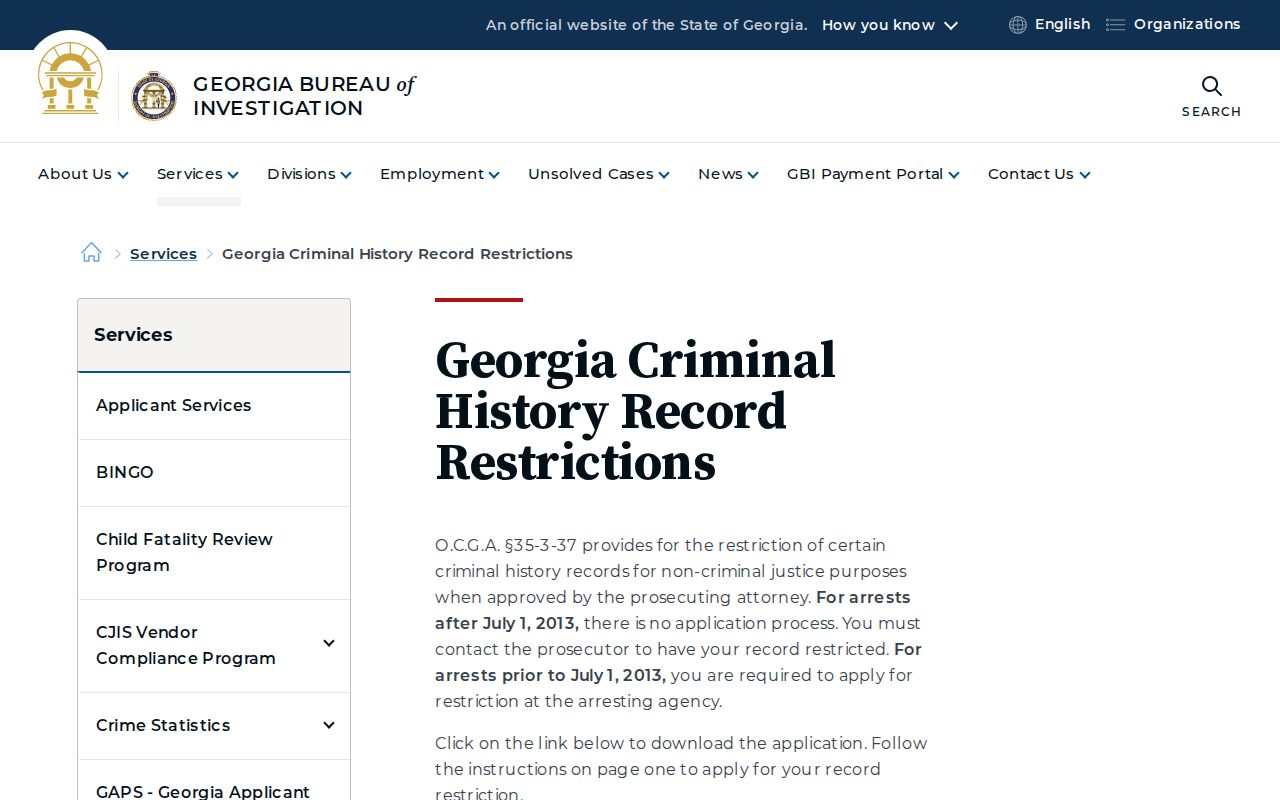
Restriction is charge-specific and is not literal destruction. Confirm that the court disposition is correct first; a public court file may also require a separate sealing motion or order under applicable Georgia law.
A registry listing is another distinct record type. The GBI's official Georgia Sex Offender Registry page explains the registry, search access, downloadable data, and statutory notice.
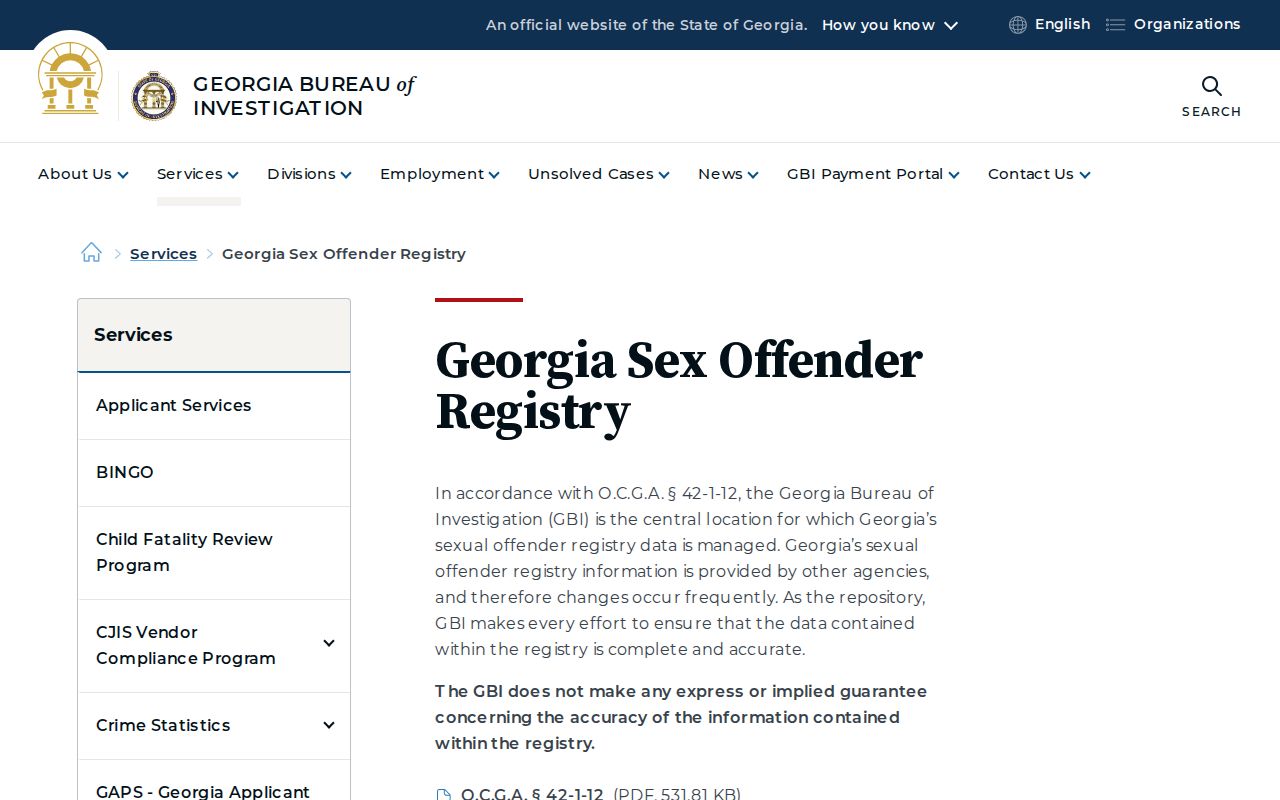
The registry is not a criminal-court docket. A registry entry should not be used to infer every charge or case event; consult the relevant court file for the prosecution record and disposition.
The live GBI public sex-offender search interface provides the official current search channel.
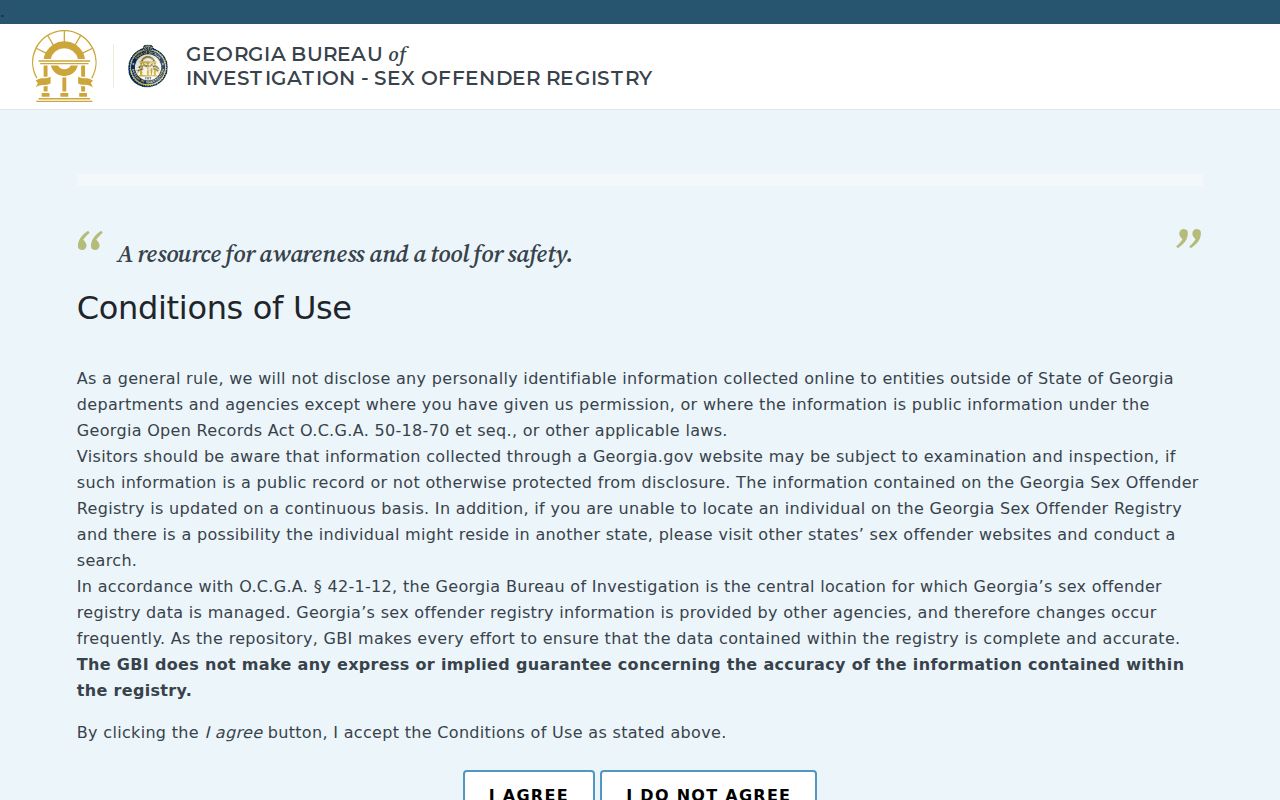
Use the live registry for current public-safety checking and the clerk for case documents. Keeping those systems separate prevents a registry result from being mistaken for the complete Calhoun County criminal case file.
Case Record Access & Restrictions
Georgia courts provide public case access subject to confidentiality, sealing, and protection of personal information. Public files may omit or redact Social Security numbers, full dates of birth, victim and minor information, medical material, protected addresses, juvenile files, and sealed documents. A public docket can therefore be useful without exposing every document or identifier.
Ask the clerk whether the case exists, whether any part is paper-only or archived, and whether a sealing or restriction limits release. The Georgia Open Records Act governs agency records, but court copies should be requested through the clerk's court-access procedure. A clerk can explain access, certification, costs, and filing procedure but cannot give legal advice about defending a charge, appealing, or qualifying for relief.